Get Email Updates • Email this Topic • Print this Page


Hypnosis? Good point, Nameless. Though I would extend the idea a little: how about good old torture? Or maybe some better new torture? Somebody remembers "1984"? "How many fingers, Winston?". Yes, 2 + 2 = 5, if Big Brother says so. The Inner Party had its methods...
P.S. The golden dawn rises in my head. Manored, do you happen to know the answer yourself?? Did you give us half-of-a-joke ;-) ? If it's not a joke then it's a koan, or is that the same? Ok, my answer is..
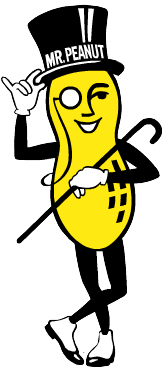
Ask the peanut!
Boinng!!!! Satori!
If someone knew what the word "peanut" meant, and what the word "human" meant, it would seem difficult to convince him that the two could be applied to the same object.
You could look at the issue through the theory of perception and immaterialist principles by George Berkeley. Berkeley's immaterialism is essentially what Locke's empiricism upheld, which was that all knowledge comes from experience. However, for Berkeley, if we are directly aware of nothing but ideas (which he asserts in Principles of Human Knowledge) then we have no reason to believe in the existence matter, nor would we have any concept of matter. Long story short, Berkeley asserts that there is no material substance? only immaterial substance called spirits.
How does this tie into the perception of a person as a peanut? In principle 4 of Principles, Berkeley basically says that if we are aware of nothing but ideas (i.e. the idea of peanut? though it was not really meant in this context). So take this three step logical proof.
1)We perceive Desks, Chairs, and Houses
2)But we perceive nothing but our own ideas or sensations, which exist only in our minds.
3)Therefore, Desks, Chairs, and Houses are ideas or sensations, which cannot exist unperceived.
Berkeley asserts (again) that there is no material substance, only immaterial substances. Now if you apply Berkeley's immaterialist thesis to the perception of a man as a peanut (or really how to convince a person that they are in fact a peanut), the person does not need (under this theory) to be concerned with the empirical facts of the attributes of what it is to be a peanut, but rather the idea of a peanut. The idea of a peanut is susceptible to mental manufacturing, which can be a combination of mental abstraction. So, the person could have isolated abstract elements which could resemble a peanut, like a body shape resembling a peanut.
So, how do you convince a person that they are a peanut. Assert that matter is immaterial, posit notions of mental manufacturing and abstract ideas in which they could resemble the idea of a peanut. If nothing exists but ideas? a peanut could be anything.. including a peanut-shaped person.
Esse Est Percipi (to be is to be perceived)

 Stumble It!
 Tweet This
 Bookmark on Delicious
 Share on Facebook
 Share on MySpace